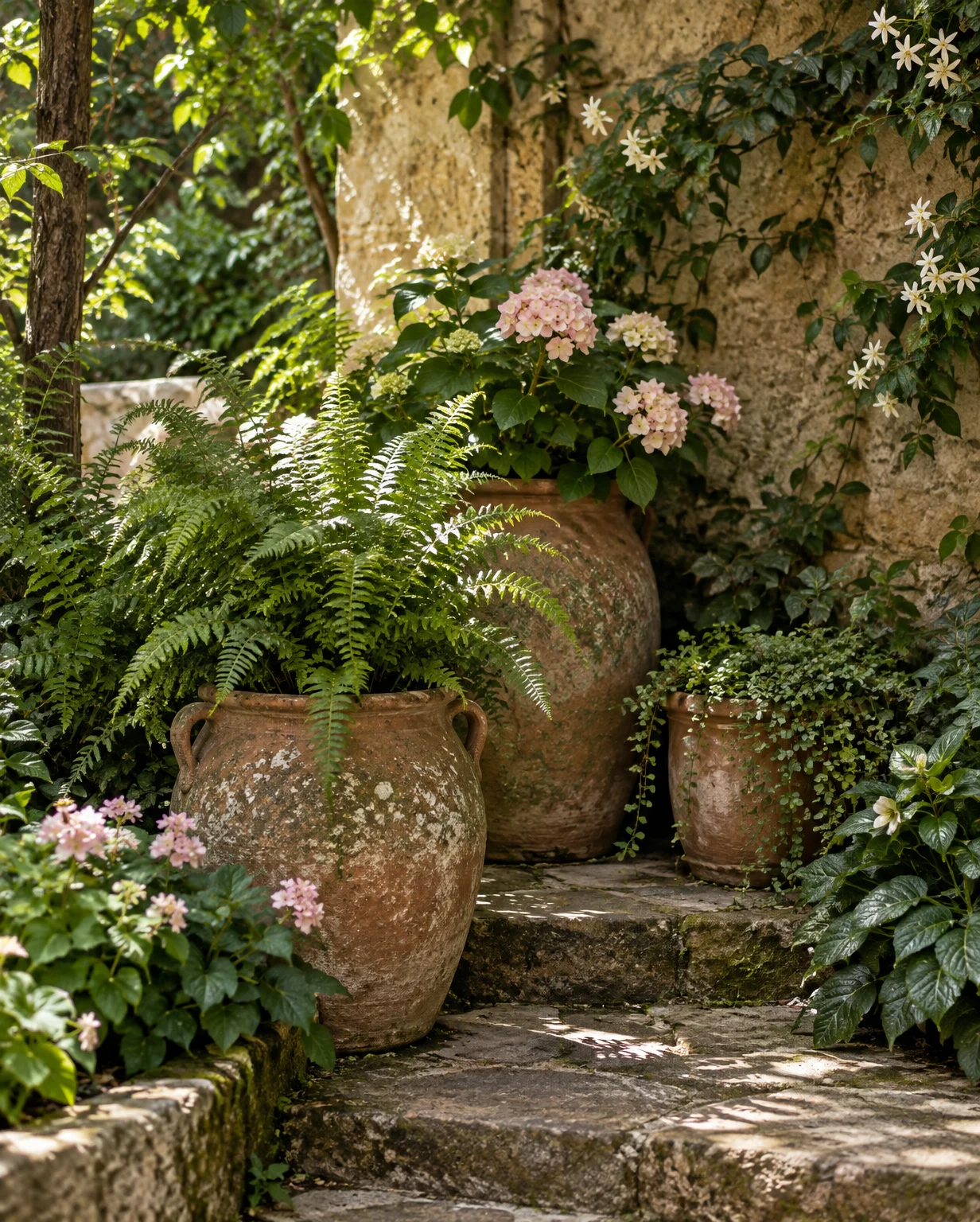
A shady corner can still make a lovely container garden. The key is to work with the light you have, then bring interest through foliage, varied shapes, and a container suited to its setting.
First, observe the spot at different times of day. Shade can range from bright, indirect light to only a brief patch of sun, and nearby walls or trees may affect both light and moisture. Record what you notice before choosing plants, and check the light requirements of each plant you’re considering.
Choose a container with drainage holes so excess water can escape. If the pot sits on a saucer, empty standing water when needed. A good-quality growing mix suited to containers can support healthy roots, while the right container size gives plants room to grow without becoming unwieldy.
For a balanced planting, consider contrasting leaf shapes, sizes, and colors. One plant with an upright form can pair well with softer, spreading foliage, provided their light, water, and growing needs are compatible. Check mature sizes as well as current nursery or packet labels, and confirm that each choice is suitable for your climate and growing conditions.
Shade doesn’t automatically mean a container will stay moist. Exposure, temperature, wind, container material, and plant growth all affect how quickly the mix dries. Check the soil regularly and water according to its condition rather than sticking to a fixed schedule.
A simple planning checklist can keep the project manageable: note the hours and quality of light, measure the space, select plants with compatible needs, confirm mature sizes, and make sure the pot drains. Revisit your observations as the season changes; a shady planting is a conversation with a place, not a one-size-fits-all formula.
Leave a Reply